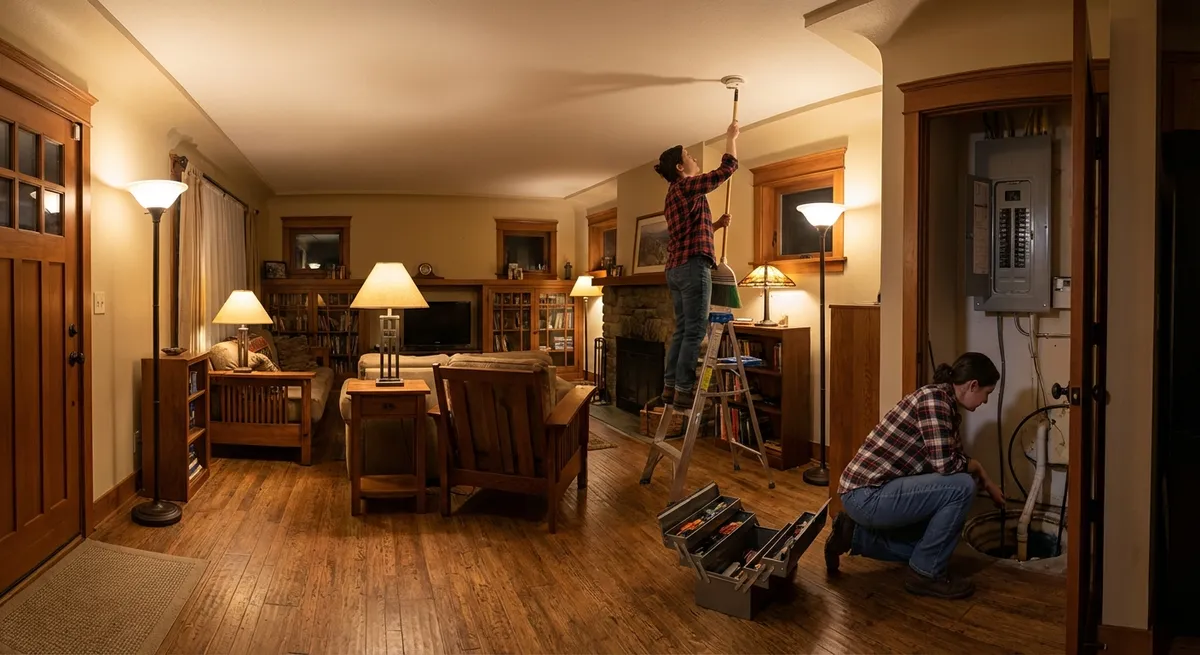
This guide walks you through five core strategies to protect and maintain your home before issues grow dangerous or unaffordable.
1. Treat Water Like an Invader, Not a Nuisance
Water is one of the most destructive forces in a home—often more damaging than a break-in. It seeps, rots, molds, warps, and ruins structural materials long before you see visible signs.
Make water control a top priority:
- Guard your roof and gutters. Clean gutters and downspouts at least twice a year so water is directed away from your foundation. Standing water along your home’s perimeter is a warning sign.
- Inspect around windows, doors, and siding. Look for cracked caulk, gaps, or soft spots. These small openings let rain and moisture in, where it can slowly damage framing and insulation.
- Watch for hidden plumbing issues. Discolored walls, peeling paint, warped flooring, or musty smells can signal a slow leak inside walls or under floors.
- Protect vulnerable areas. Use splash blocks or extensions on downspouts, ensure your yard slopes away from the house, and consider a sump pump in flood-prone basements.
- Act immediately on leaks. A “small” leak is never small over time. Shut off water to the affected area, dry it thoroughly, and repair or replace damaged materials right away to avoid mold and structural decay.
When you treat water as a threat to be controlled, not tolerated, you dramatically reduce the risk of rot, mold, and foundation damage.
2. Make Your Major Systems Work For You, Not Against You
Your home’s major systems—HVAC, electrical, and plumbing—quietly run every day. When they’re neglected, they don’t just fail; they can become safety hazards.
Protect your home by keeping those systems in fighting shape:
- HVAC (Heating & Cooling):
- Change filters regularly to prevent dust buildup and strain on the system.
- Schedule professional inspections annually to check for gas leaks, blocked vents, and failing components.
- Keep outdoor units clear of leaves, grass, and debris.
- Electrical:
- Replace warm, buzzing, or discolored outlets immediately.
- Don’t overload outlets or daisy-chain multiple power strips.
- If you have an older home with outdated wiring or a frequently tripping breaker, have a licensed electrician inspect your panel and circuits.
- Plumbing:
- Know where your main shutoff valve is and make sure family members know how to use it.
- Inspect exposed pipes in basements, crawlspaces, and under sinks for corrosion or slow drips.
- In cold climates, insulate vulnerable pipes and disconnect hoses before freezing weather.
Routine checks turn your systems into allies that support safety and comfort, instead of hidden risks waiting to fail at the worst possible moment.
3. Strengthen Your Home’s Outer Shell Before It Weakens
Your home’s exterior is the armor that stands between your family and the elements. Once that armor is compromised—even slightly—moisture, pests, and temperature extremes can penetrate deeper.
Focus on preserving your home’s “shell”:
- Roof: Look for missing, curling, or damaged shingles after storms. Check for rusted flashing around chimneys and vents. A tiny opening on the roof can let in gallons of water during a heavy rain.
- Siding and Paint: Cracked paint or damaged siding is more than cosmetic. It exposes underlying materials to moisture and pests. Keep paint and sealant in good condition and repair damaged sections promptly.
- Windows and Doors: Replace worn weatherstripping and cracked caulk. Gaps here drive up utility bills and let in drafts, insects, and moisture.
- Foundation: Walk your home’s exterior and check for new cracks or expanding existing ones. Hairline cracks can be normal, but widening or stair-step cracks are warning signs that should be evaluated.
- Garage and Exterior Structures: Inspect garage doors, decks, and porches for rot, loose hardware, sagging boards, or rusted fasteners. These can turn from minor hazards into injuries or structural failures quickly.
Defending the exterior is one of the most effective ways to keep the interior safe, dry, and stable for decades.
4. Use Maintenance to Quiet Hidden Health and Safety Risks
Not all threats to your home are visible. Some are silent, odorless, and slow-moving—but dangerous to your family’s health and safety if they’re not controlled.
Prioritize these protective measures:
- Smoke and Carbon Monoxide Detectors:
- Install detectors on every level and near bedrooms.
- Test them monthly and replace batteries at least once a year.
- Replace the units themselves according to manufacturer guidelines (often every 7–10 years).
- Fire Safety:
- Keep at least one ABC-rated fire extinguisher in the kitchen and near any high-risk area (garage, workshop).
- Clean dryer vents regularly—lint buildup is a major fire hazard.
- Avoid storing flammable liquids near heat sources.
- Air Quality and Ventilation:
- Use exhaust fans in kitchens and bathrooms to remove moisture and fumes.
- Address mold promptly; visible mold or persistent musty smells deserve immediate inspection.
- Consider testing for radon, especially in basements or ground-level living spaces.
- Pest Prevention:
- Seal gaps around pipes, vents, and the foundation.
- Store food securely and avoid clutter that can harbor rodents or insects.
- Termites and carpenter ants can cause severe structural damage—annual inspections in vulnerable regions are a smart investment.
By building these checks into your routine, you turn invisible threats into manageable maintenance tasks instead of emergencies.
5. Turn Maintenance Into a Simple, Repeatable Protection Plan
A home doesn’t need perfect attention—it needs consistent, basic care. The most effective defense is a simple plan you’ll actually follow.
Build a home protection routine:
- Create a seasonal checklist.
- Spring: Check roofing, clean gutters, inspect foundation, test exterior drainage.
- Summer: Service AC, inspect exterior paint and caulk, check decks and railings.
- Fall: Clean gutters again, service heating system, winterize pipes and outdoor faucets.
- Winter: Monitor ice dams, check indoor humidity, watch for condensation on windows.
- Keep a home maintenance log. Write down repairs, inspections, and dates. This helps you spot patterns (like recurring leaks) and proves care if you sell the home.
- Set reminders. Use a calendar or phone alerts for battery checks, filter changes, and annual inspections.
- Budget for preventive care. Setting aside a small monthly amount for maintenance reduces the shock of bigger repairs and helps you handle issues early.
- Know when to call a professional. If something seems unsafe, structural, electrical, or beyond your skill level, bring in a qualified expert. Doing “DIY” on critical systems can turn a small problem into a dangerous one.
When maintenance is part of your routine instead of an afterthought, your home stays ready to protect you—even when the unexpected happens.
Conclusion
Your home is more than walls and a roof—it’s a protective shell for the people and things you care about most. The threats it faces rarely arrive all at once. They build slowly: a neglected gutter, a worn seal, a silent detector, a small crack.
By treating maintenance as a shield instead of a chore, you stay ahead of those threats. Control water, care for your systems, protect the exterior shell, address hidden health and safety risks, and turn all of it into a simple, repeatable routine.
That’s how you keep small issues from becoming crises—and how you make your home a safer, stronger place for years to come.
Sources
- U.S. Department of Housing and Urban Development – Home Maintenance Checklist - Federal guidance on routine home maintenance tasks and inspection tips
- U.S. Environmental Protection Agency – Mold and Moisture - Information on preventing, identifying, and safely addressing mold and moisture problems in homes
- U.S. Fire Administration – Fire Safety at Home - Official recommendations on smoke alarms, fire prevention, and common residential fire hazards
- American Society of Home Inspectors – Home Maintenance Articles - Professional insights on common home defects and preventive maintenance strategies
- Centers for Disease Control and Prevention – Carbon Monoxide Poisoning Prevention - Health and safety guidance on CO detectors, symptoms, and home protection steps