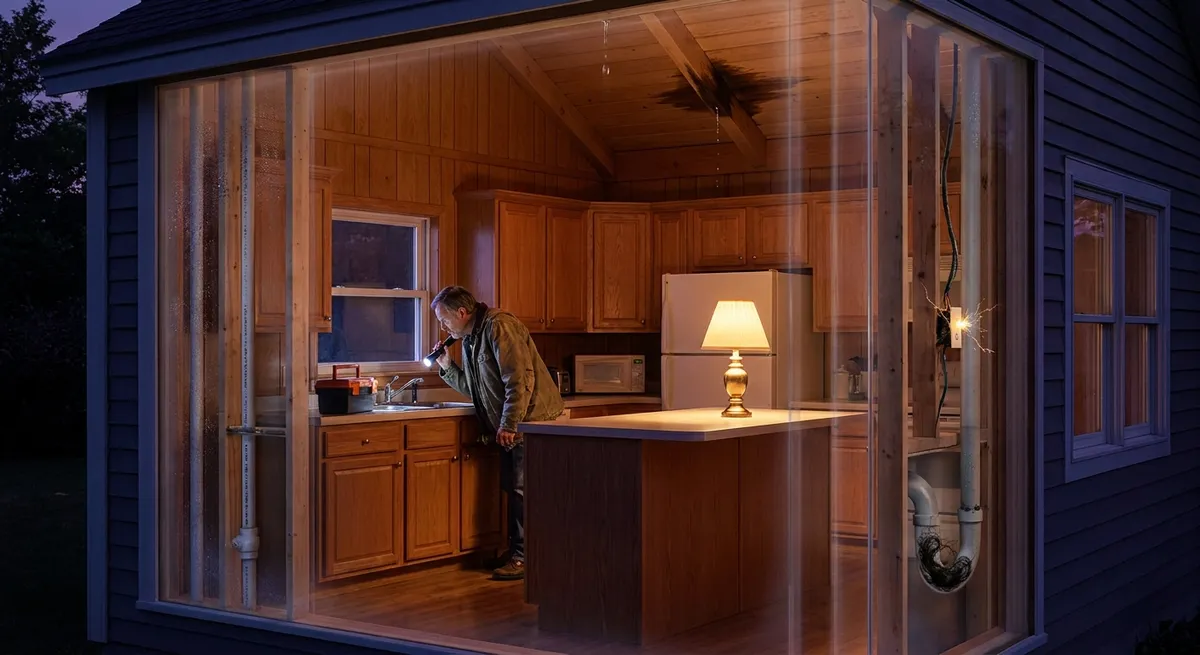
Below are five protective strategies designed to catch trouble early, strengthen your home’s weak points, and give you a clear routine to follow before small issues become expensive crises.
Strategy 1: Guard Against Water Before It Enters
Water is one of the most destructive forces in a home, and it rarely announces itself loudly at first. A slow drip, a damp corner, or a stained ceiling can signal damage to framing, insulation, wiring, and even indoor air quality.
Build a defensive habit around water intrusion. Walk the perimeter of your home each season and after major storms. Look for soil erosion near the foundation, soft or pooling spots, and gaps or cracks in siding and around windows. Keep gutters and downspouts clear and confirm that water is discharged several feet away from the house, not right beside the foundation. Inside, inspect under sinks, around toilets, behind washing machines, and near your water heater for any sign of dampness, corrosion, or moldy odors. Installing inexpensive leak detectors near high‑risk areas (water heater, washing machine, under main sinks) gives you an early alarm before damage spreads.
Protective mindset: Treat every unexplained damp spot or stain as a warning, not an inconvenience. Addressing it immediately often means a simple repair instead of structural damage and mold remediation later.
Strategy 2: Strengthen Your Home’s Weather Skin
Your home’s outer shell—roof, windows, doors, siding, and seals—is its armor. When that armor is compromised, water, wind, pests, and temperature extremes find their way in, stressing everything from structure to mechanical systems.
Build a schedule to visually inspect your roof from the ground at least twice a year and after severe weather. Look for missing, curled, or damaged shingles, sagging areas, or debris buildup. Check flashing around chimneys, vents, and skylights from a safe vantage point or with a professional’s help. Around windows and doors, run your hand along edges to feel drafts, and look for cracked or missing caulk and weatherstripping. Re‑caulking and replacing worn seals is low-cost protection that can prevent water infiltration and reduce energy loss. For siding, look for warping, cracks, peeling paint, or gaps that could let in moisture or insects.
Protective mindset: Don’t wait until you see a leak inside. Any compromise in your home’s exterior surface is a potential future leak; sealing it now is far cheaper than repairing the damage later.
Strategy 3: Keep Mechanical Systems From Failing Under Pressure
Your HVAC, water heater, plumbing, and electrical systems work quietly in the background—until they don’t. Breakdown often follows long periods of minor stress that went unnoticed. Small maintenance steps can protect you from both sudden failures and hidden hazards like carbon monoxide or electrical fires.
For HVAC, replace or clean filters as recommended by the manufacturer (often every 1–3 months). A clogged filter forces the system to work harder, shortening lifespan and raising energy bills. Have a licensed technician inspect, clean, and service your system annually, including checking refrigerant levels and safety controls. Water heaters should be inspected for rust, leaks, and corrosion; draining a small amount of water from the tank once or twice a year can reduce sediment buildup. In your electrical panel, have a qualified electrician address any signs of overheating, burning smells, or frequently tripping breakers. Around the home, replace damaged cords, avoid overloading outlets, and test GFCI outlets in kitchens, bathrooms, garages, and outdoor areas monthly.
Protective mindset: Assume that anything critical to your comfort—heating, cooling, hot water, electricity—needs preventative care. Waiting for it to fail usually means higher bills, higher risk, and more disruption.
Strategy 4: Control Indoor Air and Humidity to Protect Structure and Health
Humidity and ventilation are often overlooked, but they play a major role in both structural durability and health. Too much moisture invites mold, mildew, and dust mites, and can damage wood, drywall, and finishes. Too little can crack wood floors and furniture and stress certain mechanical components.
Use a simple hygrometer to monitor indoor humidity. Aim for roughly 30–50% relative humidity in most climates. In bathrooms, always run exhaust fans during and after showers; clean the fan covers periodically so they move air effectively. In kitchens, use the range hood when cooking, especially when boiling or frying. In basements and crawl spaces, watch for musty smells, condensation, or visible mold—these are early red flags. Consider a dehumidifier in chronically damp areas and ensure clothes dryers are vented to the outside, not into attics or crawl spaces. Replace HVAC filters on schedule and consider higher‑quality filters if family members have respiratory issues (within the limits recommended by your system manufacturer).
Protective mindset: Don’t normalize musty odors or persistent condensation. If your home smells damp or windows frequently fog inside, your structure and your lungs are telling you the same thing: something needs attention.
Strategy 5: Create a Simple Inspection Rhythm You Can Actually Follow
The most protective maintenance strategy is the one you’ll keep using. Complex checklists that sit in a drawer don’t defend your home; small, consistent habits do. Build a routine that fits your life and covers the highest‑risk areas first.
Break the year into seasonal passes: one 30–60 minute walkthrough at the start of each season. In each pass, scan for the essentials: water issues (inside and out), roof and exterior condition, mechanical systems (unusual noises, smells, or behavior), safety gear, and indoor air signs. Keep a running “home log” on paper or in a simple app where you record what you checked, what you noticed, and any repairs done (with dates and contractor names). Replace smoke alarm and carbon monoxide detector batteries at least once a year, and hit the test button monthly. Fire extinguishers should be in accessible locations, with gauges in the green and no visible damage.
Protective mindset: Think of yourself as your home’s inspector-in-chief. You don’t have to fix everything yourself, but you do want to be the first to notice when something changes—and act before that change becomes damage.
Conclusion
Your home doesn’t fail overnight; it’s worn down by quiet, persistent threats—water, time, neglect, and small oversights. By guarding against water intrusion, reinforcing your home’s exterior, tending to mechanical systems, managing indoor air, and following a simple inspection rhythm, you turn maintenance into protection. The goal isn’t perfection; it’s prevention. A few focused checks each season can spare you from emergency calls, sudden expenses, and preventable hazards.
When you treat maintenance as your home’s shield—not just a chore—you protect your investment, your safety, and your peace of mind.
Sources
- U.S. Environmental Protection Agency – Mold and Moisture - Guidance on preventing and addressing moisture problems and mold in homes
- Federal Emergency Management Agency (FEMA) – Protect Your Property from Water Damage - Practical steps for reducing flood and water-related damage to homes
- U.S. Department of Energy – Energy Saver: Heating & Cooling - Official recommendations for HVAC maintenance and efficiency
- Centers for Disease Control and Prevention – Healthy Home Guide - Information on moisture, indoor air quality, and home health hazards
- National Fire Protection Association – Smoke Alarms and Carbon Monoxide Alarms - Safety standards and maintenance tips for alarms in the home