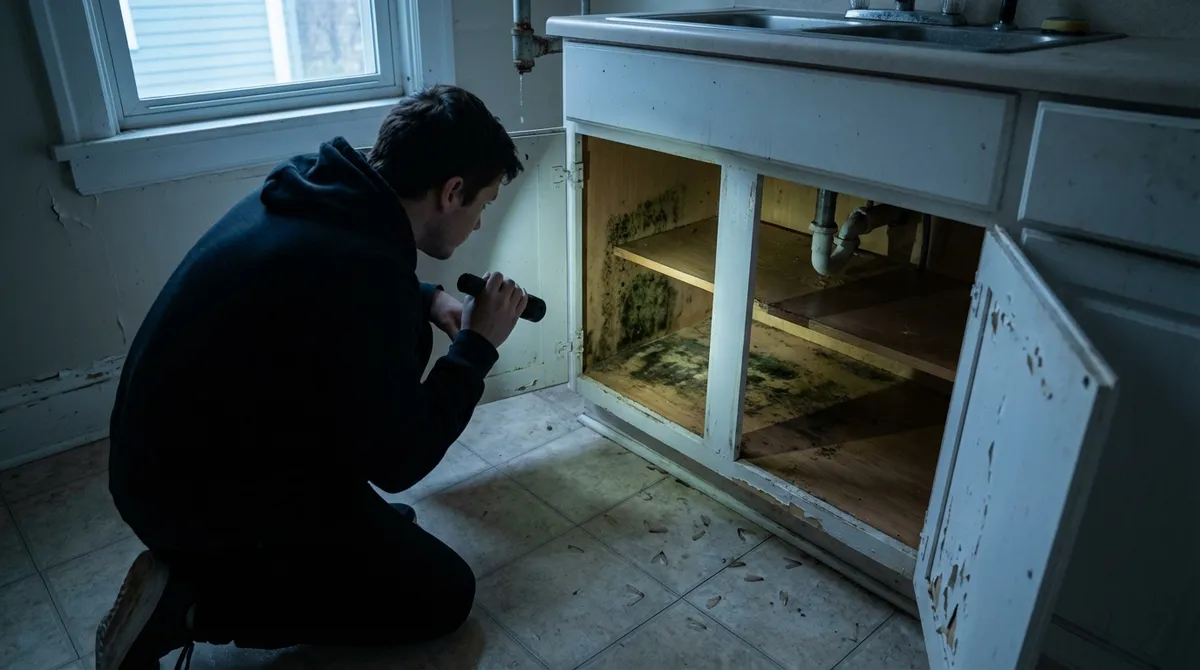
Strategy 1: Hunt Down Moisture Before It Breeds Mold and Rot
Water is one of the most destructive forces your home will ever face—and it rarely announces itself with a flood. It seeps, condenses, and drips in the background, quietly attacking wood, drywall, insulation, and even your air quality.
Make it a routine to scan your home for moisture “red flags”: discolored or bubbling paint, musty smells, soft spots on walls or ceilings, warped flooring, or recurring condensation on windows. Check under sinks, behind toilets, around tubs and showers, and near your water heater. In basements and crawl spaces, look for damp walls, efflorescence (white powdery residue on masonry), or rust on metal surfaces.
Defend your home by keeping humidity in check—ideally between 30–50% indoors. Use exhaust fans when cooking or showering, run a dehumidifier in damp areas, and ensure your clothes dryer vents fully outdoors. Fix small leaks immediately; even a slow drip can feed mold growth inside hidden cavities. Outside, maintain healthy drainage: gutters should be clear, downspouts should discharge away from your foundation, and soil should slope away from the house. The earlier you attack moisture, the more you prevent rot, structural damage, and costly remediation.
Strategy 2: Treat Your Roof Like Armor, Not an Afterthought
Your roof is your home’s first line of defense—and it silently absorbs assault from wind, rain, UV rays, and debris every single day. Yet many homeowners only look up after a storm, a leak, or a ceiling stain shows up. By then, water may have been working its way through layers of your home for weeks or months.
A protective mindset means you visually inspect your roof and attic at least twice a year and after major storms. From the ground (or with binoculars), look for missing, cracked, or curling shingles, damaged flashing around chimneys and vents, sagging sections, or heavy moss and algae growth. In the attic, check for damp insulation, darkened wood, moldy smells, or daylight peeking through where it shouldn’t.
Keep your roof’s “supporting cast” in good shape too. Clean gutters and downspouts regularly so water can’t pool and back up under shingles. Trim tree branches that hang over the roof to reduce impact from falling limbs and lessen leaf buildup. If you live in an area with heavy snow, learn safe ways to reduce snow loads on vulnerable sections. When in doubt, schedule a professional inspection—especially if your roof is over 15–20 years old. Remember: a small roofing repair today is often the difference between a simple fix and a full roof and drywall replacement later.
Strategy 3: Guard Your Home’s Air and Energy with HVAC Care
Your heating and cooling system does more than keep you comfortable—it protects your home and your health. Poorly maintained HVAC can lead to excessive humidity, frozen pipes, mold-friendly conditions, and shockingly high energy bills. Neglected systems also fail more often right when you need them most, such as during a heatwave or cold snap.
Protect your system with consistent attention. Replace or clean air filters as often as your manufacturer recommends (often every 1–3 months, more often if you have pets or allergies). Restricted airflow makes your system work harder, raising the risk of breakdowns and shortening its lifespan. Keep supply and return vents open and unblocked by furniture or rugs; blocking them doesn’t save money—it strains your system.
Schedule professional HVAC tune-ups at least annually—ideally once before the cooling season and once before heating season in extreme climates. A technician can check refrigerant levels, clean coils, inspect heat exchangers, and verify safe operation. This isn’t just about comfort: cracked heat exchangers can leak carbon monoxide, and poorly draining condensate lines can cause hidden water damage. Also verify that any combustion appliances (furnace, gas water heater) are vented correctly, and install carbon monoxide detectors on each level of your home. An efficient, well-maintained system protects your wallet, your structure, and your family.
Strategy 4: Fire-Proof the Everyday: Wiring, Heat, and Hidden Ignition Points
House fires often start in places homeowners rarely think about—an overloaded outlet, a neglected dryer vent, or a forgotten extension cord behind furniture. Protective maintenance means treating potential ignition points with respect and vigilance.
Start with your electrical system. Watch for flickering lights, frequently tripped breakers, warm outlets or switch plates, or burning smells—these can all signal unsafe wiring or overloaded circuits. Avoid daisy-chaining surge protectors or power strips, and never cover electrical cords with rugs where heat can build up unnoticed. Older homes may benefit from an electrical inspection to verify that wiring and panels meet current safety standards.
Your dryer vent demands just as much attention. Lint is highly flammable, and it can accumulate not only in the lint trap but also in the duct that vents outdoors. Clean the lint filter after every load and inspect the exterior vent regularly. At least once a year (more if you do frequent laundry), have the vent duct cleaned or clean it yourself with a proper vent brush. If clothes take longer to dry, or the dryer feels excessively hot, don’t ignore it.
Finally, look at other heat sources: space heaters should have automatic shutoff if tipped and be kept far from curtains, bedding, and furniture. Store flammable products (like gasoline, solvents, and oil-based paints) in proper containers away from ignition sources. Test smoke alarms monthly, replace batteries at least once a year, and replace the units themselves about every 10 years. These simple habits dramatically reduce your home’s fire risk.
Strategy 5: Fortify the “Shell”: Windows, Doors, and Exterior Barriers
Your home’s outer shell—its walls, windows, doors, and exterior surfaces—is a protective skin. When that skin is cracked, rotted, or poorly sealed, you invite water, pests, drafts, and even structural degradation. Regularly walking your home’s perimeter with a critical eye is one of the simplest ways to protect it.
Inspect exterior siding, brick, and trim for cracks, gaps, peeling paint, or soft, spongy wood. Damaged caulk around doors and windows can allow water to infiltrate wall cavities, where it quietly damages insulation and framing. Replace failing caulk and weatherstripping when you see wear; these inexpensive materials do outsized work in keeping out moisture and maintaining energy efficiency.
Check window sills and door thresholds for water stains or decay. Make sure exterior doors close and latch securely, and that any storm doors or screens are intact. If you see evidence of pests—chew marks, droppings, mud tubes from termites, or small entry holes—address them immediately with a licensed pest professional. In colder climates, maintaining a solid thermal envelope protects plumbing from freezing and reduces condensation issues inside walls.
If your exterior is painted, don’t wait for total failure before repainting; paint is more than cosmetic—it’s a protective coating. For masonry, keep an eye on mortar and consider professional repointing when joints begin to crumble. An intact exterior shell keeps the elements where they belong: outside.
Conclusion
Your home doesn’t need you to react to disasters; it needs you to notice whispers before they become alarms. By tracking moisture, respecting your roof, caring for your HVAC, fire-proofing everyday systems, and maintaining a strong exterior shell, you’re not just “doing maintenance”—you’re actively defending your home and the people in it.
These five strategies work best as habits, not one-time projects. Choose one area to focus on this week—a moisture check, a gutter clean-out, a filter change, a dryer vent inspection, or an exterior walk-around—and build from there. Small, consistent actions today are the shield that stands between your home and tomorrow’s emergencies.
Sources
- U.S. Environmental Protection Agency – Mold and Moisture - Explains how moisture problems lead to mold growth and building damage, with prevention guidance
- Federal Emergency Management Agency (FEMA) – Protect Your Property from Water Damage - Detailed information on drainage, roofing, and moisture protection strategies for homes
- U.S. Department of Energy – Heating & Cooling - Covers best practices for HVAC maintenance, efficiency, and safe operation
- U.S. Fire Administration – Clothes Dryer Fire Safety - Provides statistics and maintenance tips to reduce the risk of dryer-related house fires
- National Fire Protection Association (NFPA) – Electrical Safety in the Home - Offers guidance on recognizing and reducing electrical fire hazards in residential settings