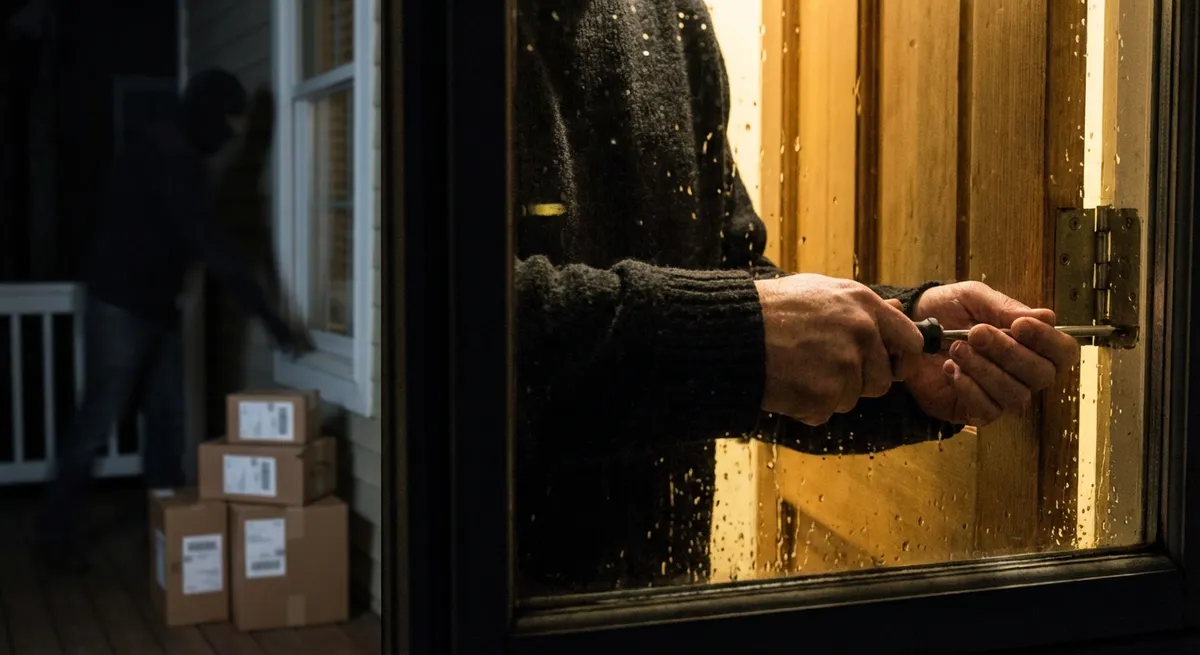
1. How Criminals “Case” a Home Before They Ever Approach the Door
Before many burglars touch your property, they’ve already gathered information about you—often without you realizing it. They watch your routines, scan for patterns, and test your responses.
Common tactics include:
- Watching your daily schedule: Noting when lights go out, cars leave, and packages sit untouched.
- Testing reactions: A doorbell ring with no one home, a flier left on the door, or a “lost pet” knock can reveal if you’re away or slow to respond.
- Scanning exterior clues: Overgrown landscaping, piled-up mail, dark side yards, and broken fixtures all signal low vigilance.
- Checking online: Public social media posts about vacations, deliveries, or high-end purchases can flag your home as a target.
To protect yourself:
- Vary your routines when possible—simple shifts in lights, curtains, and parking patterns make your home less predictable.
- Use timers or smart bulbs so your home never looks consistently dark for long stretches.
- Keep exterior tidy—maintained landscaping, cleared mail, and working exterior lights communicate that someone is paying attention.
- Think before you post: delay travel and big-purchase photos until you’re back home and items are installed or out of sight.
When your home looks watched, maintained, and unpredictable, most would-be intruders move on to easier targets.
2. The Overlooked Weak Spots: Garages, Side Doors, and “Trust Gaps”
Many homeowners obsess over their front door while leaving secondary entry points dangerously exposed. Criminals know this—and they rarely choose the front.
High-risk weak spots include:
- Attached garages: Old openers, doors left slightly ajar, or emergency release chords accessible from outside can provide quiet entry.
- Side and back doors: Often less visible from the street and sometimes fitted with weaker locks or hollow-core doors.
- Basement and egress windows: Especially those hidden by shrubs or fences, or with cheap latches.
- Shared or “trusted” access points: Key boxes with simple codes, spare keys under mats, or unvetted contractors and cleaners.
Protective steps:
- Treat your garage like a primary entrance:
- Upgrade to a modern opener with rolling-code technology.
- Add a deadbolt between garage and interior.
- Use manual locks on garage doors when traveling.
- Reinforce side and back doors with solid-core or metal doors, quality deadbolts, and 3" screws in the hinges and strike plates.
- Use window locks and security film on accessible windows; consider window alarms on basement or hidden windows.
- Eliminate “trust shortcuts”: no spare keys outside, no shared access codes, and change codes when tenants, roommates, or service providers leave.
Your home is only as strong as its most neglected door. Give every entrance the same level of defense you give the front.
3. The Digital Front Door: Securing Wi‑Fi, Smart Devices, and Cameras
Today’s intruder doesn’t always pick a lock—sometimes they log in. Smart locks, cameras, and Wi‑Fi thermostats can be powerful security tools, but only if they’re set up defensively.
Common digital vulnerabilities:
- Default usernames and passwords left unchanged on routers, cameras, and smart locks.
- Wi‑Fi networks with weak passwords or outdated encryption (like WEP or WPA).
- Remote access features left open without multifactor authentication.
- Cameras and doorbells from unknown brands with poor security practices.
Protective actions:
- Lock down your router:
- Change the default admin username and password immediately.
- Use strong WPA2 or WPA3 encryption and a long, unique Wi‑Fi password.
- Disable remote administration if you don’t need it.
- Harden smart devices:
- Create a separate “guest” or “IoT” network for smart devices so they don’t share the same network as your personal computers.
- Turn on two-factor authentication (2FA) for any device or app that offers it, especially smart locks and cameras.
- Regularly check for and install firmware updates.
- Choose reputable brands with clear privacy policies and security documentation. Avoid unknown or extremely cheap devices that may not be patched or secured properly.
Remember: a compromised camera doesn’t just invade your privacy—it can give criminals a live feed of your habits, blind spots, and daily schedule. Treat your digital perimeter with the same seriousness as your physical one.
4. Social Engineering: When the Threat Knocks, Calls, or Emails
Not all intrusions are forced. Many start with someone talking their way past your defenses—at the door, on the phone, or through your inbox. This is social engineering: using manipulation instead of a crowbar.
Common tactics you should be alert to:
- Impersonation at the door: Fake utility workers, delivery drivers, or contractors who show up unannounced and pressure you to let them in or step outside.
- Urgent calls and texts: Claims of missed jury duty, unpaid fines, or “suspicious activity” demanding immediate action or payment.
- Phishing emails: Messages that look like your bank, delivery service, or streaming service asking you to “verify” information or click a link.
Protective responses:
- Verify before you trust:
- Ask door-to-door visitors for official ID and call the company—using the number from their website, not from the person at your door.
- Never feel pressured to open the door fully; speak through a doorbell camera or from behind a locked door if you’re unsure.
- Hang up and call back: If someone calls claiming to be from a bank, government agency, or utility, hang up and call the official number on your bill or the institution’s website.
- Handle emails with suspicion:
- Don’t click links or open attachments from unexpected messages.
- Type the site address directly into your browser instead of following emailed links.
Your instinct to be polite can be exploited. It’s not rude to protect your home, your data, and your family—it’s responsible. A legitimate professional will respect your caution.
5. Building a Layered Shield: Lighting, Neighbors, and Redundancy
The safest homes don’t rely on one “hero” device or trick. They use layers—multiple small barriers that together create a powerful deterrent and fast response if something goes wrong.
Key protective layers to build:
- Lighting as a warning system:
- Motion-activated lights on all sides of the home, especially driveways, paths, and hidden corners.
- Consistent nighttime lighting patterns using timers or smart bulbs to suggest occupancy.
- Natural surveillance:
- Trim shrubs and trees away from windows and doors so intruders have fewer hiding spots.
- Keep outdoor areas visible from the street and from inside your home.
- Community awareness:
- Get to know your immediate neighbors and agree on what’s “normal” around your homes.
- Share contact information and alert each other to suspicious vehicles, people, or patterns.
- Alarm and camera redundancy:
- Use a monitored alarm system or, at minimum, loud sirens that draw attention and scare off intruders.
- Position cameras to cover entries and approaches, with overlapping fields of view where possible.
- Routine checks:
- Walk your property monthly with a critical eye: broken bulbs, sagging fences, stuck locks, and blind spots should be addressed immediately.
No single strategy is perfect, but together they send a clear message: this home is watched, cared for, and ready to respond. Burglars seek quick wins—not well-defended spaces.
Conclusion
Security isn’t a gadget you buy once; it’s a mindset you apply every day. When you understand how criminals really evaluate and approach homes—watching routines, probing weak points, exploiting trust, and testing your digital defenses—you can close those invisible doors before they’re ever tried.
Start with one area: shore up an overlooked entrance, lock down your Wi‑Fi, or talk with your neighbors about what you’ll watch for together. Each step thickens your shield. At Home Shield Works, our goal is simple: help you stay one step ahead, so your home stays what it should always be—a place of safety, not risk.
Sources
- FBI – Crime Data Explorer: Burglary Offenses – Official U.S. statistics on burglary trends and patterns
- U.S. Department of Justice – Crime Prevention Tips – Practical guidance on preventing property crime and protecting your home
- Consumer Reports – How to Secure Your Home Like a Pro – Independent evaluations of home security strategies and devices
- Federal Trade Commission – Online Security – Best practices for securing networks, passwords, and connected devices
- National Crime Prevention Council – Home Security – Comprehensive tips on lighting, locks, and neighborhood-based protection strategies