Building a Strong Perimeter: Make Your Property Hard to Approach
Criminals look for the path of least resistance, and that starts at the edge of your property. A secure perimeter makes your home a less attractive target before anyone even reaches a window or door. Keep shrubs and trees near windows trimmed low so no one can hide behind them; overgrown landscaping offers perfect cover. Use thorny or dense shrubs under ground‑floor windows to add a natural barrier without sacrificing appearance.
Fencing should be in good repair, with no loose panels or convenient footholds. A fence that you can see through (like metal or picket fencing) can often be more secure than a solid privacy fence, because neighbors and passersby can spot suspicious activity. Install motion‑activated lighting along walkways, near entrances, and at dark corners of the yard; sudden light is a powerful deterrent. Visible “Private Property” or “Security Monitoring” signs reinforce the message that you’re paying attention. Walk your property at night and from the street—if you can see easy ways in, so can an intruder.
Fortifying Doors and Windows: Close the Easy Invitations
Most break‑ins don’t look like movies with shattered glass and crowbars—they happen through weak standard doors and windows. Your exterior doors should be solid core or metal, with a reinforced frame. Replace short, weak screws in strike plates and hinges with 3‑inch screws that anchor deep into the wall framing; this simple upgrade can dramatically increase resistance to kick‑ins. Deadbolts should have at least a 1‑inch throw and be properly aligned so the bolt fully engages.
Windows deserve equal attention. Install quality locks on all windows, including those on upper floors that may be accessible from a porch roof, balcony, or nearby tree. Consider window security film that makes glass harder to break, or window pins and secondary locks for sliding windows. For sliding doors, use both the built‑in lock and a sturdy bar or dowel in the track to prevent prying. Don’t forget maintenance: repair warped frames, replace broken latches, and ensure every entry point closes and locks smoothly. An unlocked or poorly maintained window is a silent invitation.
Smart Tech With Smart Habits: Using Security Systems Effectively
Security technology can be a powerful shield—but only when paired with disciplined habits. A monitored alarm system with sensors on doors and windows significantly increases the risk for intruders, especially when combined with glass‑break detectors or interior motion sensors. Visible cameras at entrances and vulnerable areas both deter and document, but they must be properly positioned, updated, and routinely checked to ensure they’re functioning.
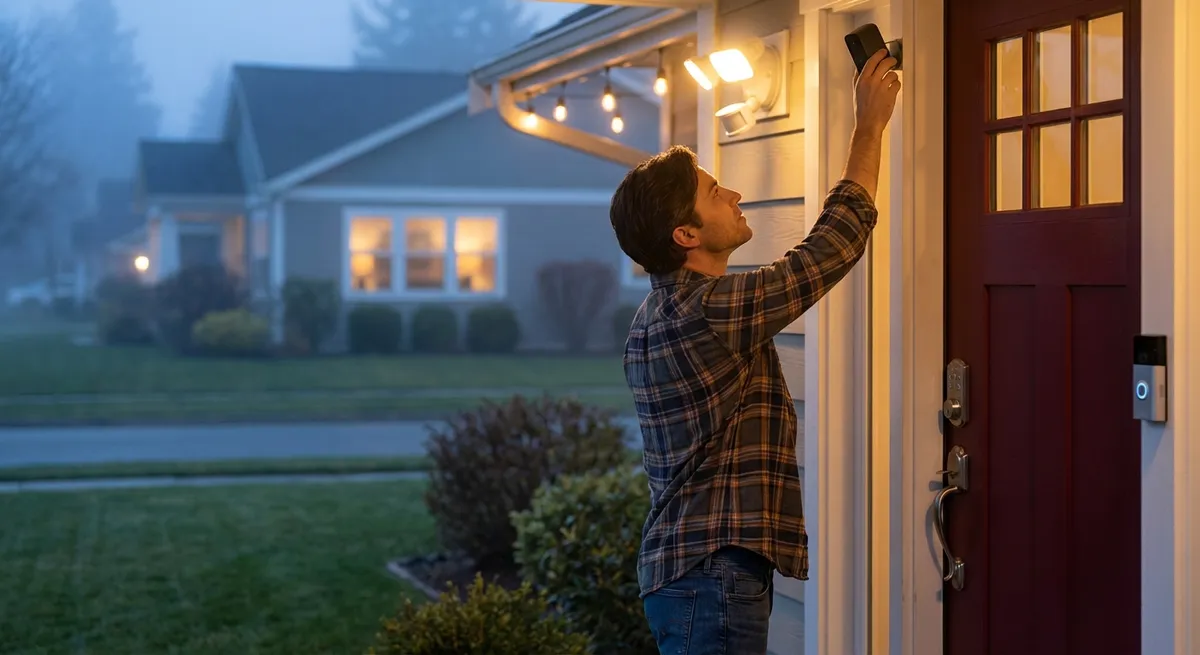
Smart locks and video doorbells add convenience and control, letting you manage access and see who’s at your door from anywhere. However, every connected device is also a potential digital doorway; secure your Wi‑Fi with strong, unique passwords and enable two‑factor authentication on your security apps. Regularly update firmware and avoid sharing login details. Most importantly, arm your system consistently—not only at night or during vacations, but when you step out “just for a minute.” The best system is the one you use every single day.
Make Your Home Look Lived‑In: Disrupt a Burglar’s Favorite Signal
An unoccupied‑looking home is a prime target. Protecting your space means constantly projecting signs of life, even when you’re away. Use timers or smart plugs to turn lights, radios, or TVs on and off in varied patterns, especially in the early evening when many burglaries occur. Don’t let mail, packages, or newspapers pile up; ask a trusted neighbor to collect them or place holds with your postal service when you travel.
Outside, keep your yard maintained: mowed grass, swept walkways, and cleared driveways suggest that someone is present and attentive. Consider leaving a car in the driveway or asking a neighbor to occasionally use your parking space. Avoid publicly announcing travel plans or posting real‑time trip updates on social media—this can broadcast your absence to people who should not know. Closed curtains during the day can sometimes signal no one is home; instead, aim for normal, everyday patterns that mirror your usual routine.
People, Routines, and Awareness: Your Most Reliable Security System
The strongest shield for any home is a combination of aware residents and a connected community. Establish household routines: always lock doors and windows, even during the day; always verify service workers’ identities; and never leave spare keys under mats, flowerpots, or obvious hiding spots. Use a lockbox or give a spare key only to a trusted person you know well. Teach children and teens basic security rules, including not sharing entry codes or details about your home online.
Get to know your neighbors and support a watchful, but respectful, environment. When neighbors recognize each other’s routines, unusual activity stands out more clearly. Share emergency contact information with at least one neighbor, and agree to keep an eye on each other’s homes during vacations or hospital stays. Finally, trust your instincts: if something feels wrong—a slow‑moving car, a stranger repeatedly walking past your home, or unfamiliar people checking doors—document what you see and contact local authorities if appropriate. A few minutes of vigilance now can prevent hours, days, or years of hardship later.
Conclusion
Securing your home is not about living in fear; it’s about making sure danger has to work so hard that it chooses another path. By strengthening your perimeter, reinforcing entry points, using technology wisely, projecting occupancy, and building human awareness, you layer your defenses and shrink opportunities for intrusion. Every lock you upgrade, light you position, routine you establish, and neighbor you connect with adds one more shield between your family and potential harm. Protection is not a single product or project—it’s an ongoing commitment to staying one step ahead.
Sources
- [FBI Uniform Crime Reporting – Crime in the United States](https://ucr.fbi.gov/crime-in-the-u.s) – Official data and trends on property crime and burglaries in the U.S.
- [U.S. Department of Justice – Preventing Home Burglary](https://www.ojp.gov/ncjrs/virtual-library/abstracts/preventing-burglary-what-works) – Research‑based insights into what measures actually reduce burglary risk.
- [National Crime Prevention Council – Home Security Tips](https://www.ncpc.org/resources/home-neighborhood-safety/crime-prevention-tips/home-security/) – Practical guidance on securing doors, windows, and property.
- [Consumer Reports – Home Security System Buying Guide](https://www.consumerreports.org/home-security-systems/how-to-choose-a-home-security-system-a7453100116/) – Independent overview of alarm and smart security technologies.
- [U.S. Department of Energy – Outdoor Lighting Basics](https://www.energy.gov/eere/buildings/articles/lighting-your-home) – Information on effective, efficient use of outdoor lighting to improve safety.