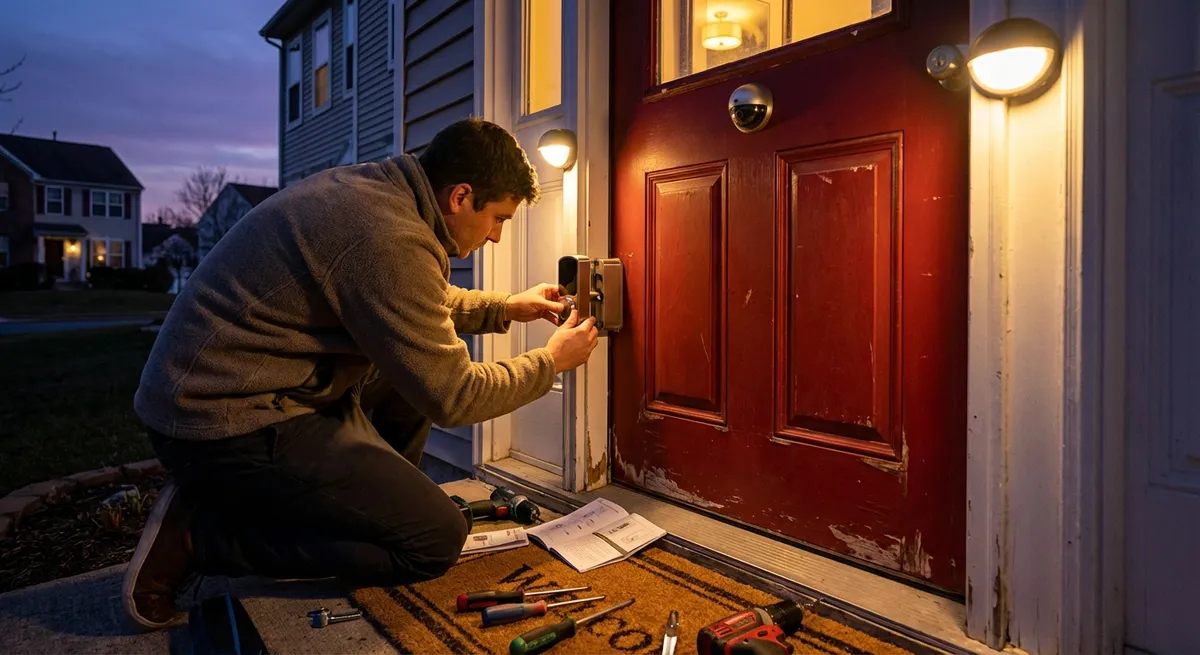
Build a Strong Physical Barrier: Doors, Windows, and Perimeter
The first layer of protection is simple: make it hard to get in. Most break-ins still occur through doors and windows, often because they’re weak, outdated, or left unsecured. Begin with your doors—ensure exterior doors are solid-core or metal, with high-quality deadbolts and reinforced strike plates secured with long screws that bite into the wall framing, not just the doorjamb.
Windows deserve equal attention. Install robust window locks, especially on ground-floor and basement windows, and consider security film that makes glass harder to shatter. Exterior lighting is another quiet but powerful deterrent: motion-activated lights at entry points, pathways, and dark corners of your property make it much harder for someone to approach unnoticed. Don’t overlook your fence and gates—keep them in good repair, lock side gates, and trim shrubs or trees that create blind spots or concealment areas near windows and doors. The goal is to send a clear message: this home is not an easy target.
Defend Your Home with Smart, Layered Security Technology
Technology should serve as an active guardian, not just an afterthought. A well-structured home security system—whether professionally monitored or DIY—adds a critical second shield around your property. Strategically place cameras to cover entryways, driveways, and vulnerable access points, and post visible signage that security is in use. Even basic systems with door and window sensors, glass-break detectors, and a loud siren can dramatically reduce risk.
Smart locks and video doorbells give you visibility and control over who comes near your home, even when you’re away. Set up alerts on your phone so you’re notified of unexpected activity, and routinely review settings to ensure devices have the latest firmware updates and strong passwords. Use separate, unique passwords for your security apps and enable two-factor authentication wherever possible. Treat your home network like a digital front door—secure your router with a strong password, change default settings, and keep your Wi-Fi encrypted. Your home’s safety now depends as much on cyber hygiene as on deadbolts.
Protect Your Home’s Health: Routine Maintenance as Risk Prevention
Not every threat is a burglar. Water, fire, and neglect can do as much—or more—damage than an intruder. Think of home maintenance as preventative medicine that stops “small issues” from turning into emergencies. Start with your roof and gutters: inspect them seasonally, especially after storms. Missing shingles or clogged gutters can channel water straight into your walls and foundation, leading to mold, rot, and structural damage that’s costly and dangerous.
Inside, prioritize systems that keep you safe: have your HVAC serviced annually, and replace air filters regularly to reduce strain and improve air quality. Inspect plumbing for slow leaks under sinks, behind appliances, and around toilets; a small drip can become a broken pipe in the worst possible moment. Test GFCI outlets in kitchens, bathrooms, and garages to reduce shock and fire risks. Treat appliance maintenance—like cleaning dryer vents and checking cords—as part of your safety ritual. Each preventative step reduces the risk of sudden failures that can compromise both your safety and your wallet.
Safeguard Against Fire, Carbon Monoxide, and Environmental Hazards
A protected home is one that is prepared for emergencies before they start. Fire and carbon monoxide (CO) don’t give warnings you can see or smell, so your alarms must be reliable. Install smoke alarms on every level of your home, inside each bedroom, and outside sleeping areas. Place CO detectors on every level, particularly near bedrooms and areas with fuel-burning appliances. Test all alarms monthly and replace batteries at least once a year—or follow manufacturer guidance for sealed, long-life units.
Fire safety extends beyond detectors. Keep a fire extinguisher in key locations such as the kitchen, garage, and near mechanical rooms, and make sure household members know how to use them (remember “pull, aim, squeeze, sweep”). Avoid overloading electrical outlets and power strips, and unplug small appliances when not in use. If you live in an area prone to floods, storms, wildfires, or earthquakes, tailor your protection: secure heavy furniture, store critical documents in waterproof/fire-resistant containers, and create a simple, written emergency plan and go-bag. Preparation doesn’t invite disaster; it limits its power over your home and family.
Think Like an Insurance Adjuster: Documentation, Coverage, and Planning
If something goes wrong, your preparations should continue protecting you long after the event. Start with a clear, up-to-date home inventory: photograph each room, record serial numbers for electronics and appliances, and store receipts or valuation documents in a secure digital format. This documentation makes insurance claims smoother and helps ensure you’re compensated fairly.
Review your homeowners or renters insurance annually. Confirm that your coverage reflects the true replacement cost of your home and belongings, not just their original purchase price. If you’ve made upgrades—new roof, security system, finished basement, or energy-efficient windows—tell your insurer; some improvements may reduce your risk profile and qualify for discounts. Don’t overlook coverage for specific threats common in your area, such as flood or earthquake insurance, which are often separate from standard policies. Finally, share your emergency contacts, key locations (shutoff valves, breaker box), and basic safety procedures with trusted family members or neighbors. A well-documented, well-communicated plan ensures that if trouble comes, you’re not facing it unprepared or alone.
Conclusion
Home protection isn’t a single lock, camera, or insurance policy—it’s a layered, preventative mindset. By strengthening your physical barriers, using smart security technology, committing to regular maintenance, guarding against unseen hazards, and planning for “what if” scenarios, you transform your house into a resilient shield for the people and memories inside it. The threats may change over time, but your preparation can stay one step ahead. Protect your home deliberately now, so it can protect you when it matters most.
Sources
- [FBI — Crime Data Explorer: Property Crime](https://cde.ucr.fbi.gov/staged) - Official U.S. data on burglary and property crime trends, useful for understanding home intrusion risks
- [U.S. Fire Administration (FEMA) — Fire Safety Topics](https://www.usfa.fema.gov/prevention/outreach/) - Guidance on smoke alarms, fire prevention, and home safety practices
- [Consumer Product Safety Commission — Home Electrical Safety Checklist](https://www.cpsc.gov/s3fs-public/513.pdf) - Detailed checklist to reduce electrical and fire hazards at home
- [U.S. Environmental Protection Agency — Carbon Monoxide Poisoning](https://www.epa.gov/indoor-air-quality-iaq/carbon-monoxide-poisoning) - Information on CO risks and proper use of CO detectors
- [Insurance Information Institute — Creating a Home Inventory](https://www.iii.org/article/how-create-home-inventory) - Step-by-step instructions for documenting belongings to support insurance claims